
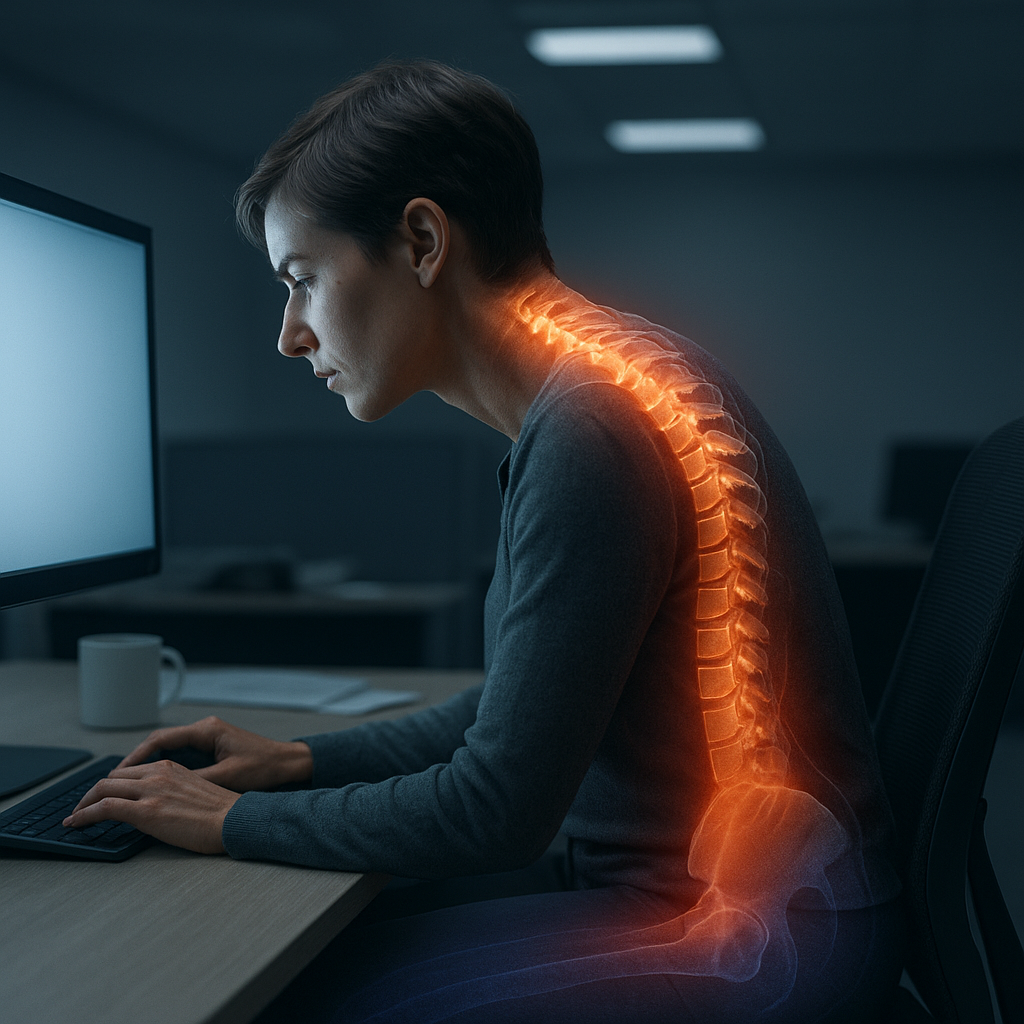
Most office workers spend the majority of their waking hours seated at a desk. It feels harmless enough — you’re not doing anything strenuous, you’re simply sitting. But research increasingly shows that prolonged sitting is one of the more quietly damaging things the modern human body endures on a daily basis. The phrase “sitting is the new smoking” has been circulating in health circles for over a decade now, and while that comparison has its critics, the underlying science is hard to ignore.
From cardiovascular strain to musculoskeletal deterioration, the effects of spending eight or more hours a day in a chair are wide-ranging and, in some cases, surprisingly serious. This article explores what actually happens to your body when you sit for extended periods — and why simply going to the gym after work may not fully undo the damage.
The Science Behind Sedentary Behaviour
Sedentary behaviour is defined as any waking activity in which you are in a sitting, reclining, or lying position with low energy expenditure — typically below 1.5 metabolic equivalents (METs). Office work fits this definition almost perfectly. Research published in the American Journal of Preventive Medicine found that adults who sit for more than six hours per day have significantly higher risks of mortality compared to those who sit for fewer than three hours daily, even after adjusting for physical activity levels.
This last part is crucial. It’s not just about whether you exercise or not. Sitting for prolonged, unbroken periods appears to have independent health consequences that are not fully cancelled out by regular exercise. Scientists refer to this as the “active couch potato” phenomenon — someone who meets the recommended 150 minutes of moderate exercise per week but still spends the majority of their day seated.
What Happens at the Cellular Level
When muscles remain inactive for long periods, a series of metabolic changes occur. Lipoprotein lipase — an enzyme critical for breaking down fat in the bloodstream — drops significantly in inactive muscles. Blood glucose rises as insulin sensitivity decreases. Over time, these cellular changes contribute to a metabolic environment that favours fat storage, inflammation, and disease progression.
What Disorders Can Be Caused by Sitting Too Long in an Office?
This is one of the most commonly asked questions around sedentary office work, and the answer is more expansive than most people expect. Prolonged sitting has been linked to a range of chronic conditions, including:
- Type 2 diabetes: Extended sitting impairs the body’s ability to regulate blood sugar. A study from the University of Leicester found that sedentary time was independently associated with poor glycaemic control.
- Cardiovascular disease: Sitting for long periods is associated with increased blood pressure, elevated triglycerides, and reduced HDL (“good”) cholesterol — all risk factors for heart disease.
- Obesity: Reduced muscle activity means fewer calories burned throughout the day, and impaired fat metabolism contributes to weight gain over time.
- Deep vein thrombosis (DVT): Poor circulation in the legs during extended sitting can lead to blood clots forming in the deep veins, which can become life-threatening if they travel to the lungs.
- Musculoskeletal disorders: Chronic lower back pain, neck stiffness, and hip flexor tightness are extremely common among desk workers.
- Anxiety and depression: Emerging research suggests a link between sedentary behaviour and poor mental health outcomes, though causality remains under investigation.
- Certain cancers: Meta-analyses have found associations between prolonged sitting and increased risk of colon, endometrial, and lung cancer, independent of body weight.
The 10 Side Effects of Prolonged Sitting
When examining the full spectrum of what sedentary office work does to the body, ten effects consistently emerge in the research literature:
1. Lower Back Pain
Sitting places about 40% more pressure on the lumbar spine than standing. Over time, this compresses spinal discs and strains the surrounding muscles and ligaments. It’s estimated that up to 80% of adults will experience significant lower back pain at some point, and desk work is a major contributing factor.
2. Hip Flexor Tightening
When you sit, your hip flexors — the muscles connecting your torso to your thighs — remain in a shortened position for hours. This leads to chronic tightness, reduced range of motion, and anterior pelvic tilt, which further contributes to lower back discomfort.
3. Weakened Glute Muscles
The gluteal muscles are among the largest and most powerful in the body. Prolonged sitting essentially “switches them off,” leading to a condition sometimes called gluteal amnesia. Weak glutes affect stability, posture, and can cascade into knee and ankle problems.
4. Poor Circulation in the Legs
Sitting compresses the veins and arteries in the legs, slowing blood flow. This can cause swelling, varicose veins, and in more serious cases, deep vein thrombosis. The risk is compounded on long-haul flights, but daily desk work creates a similar, ongoing low-level problem.

5. Neck and Shoulder Strain
Forward head posture — where the head juts forward to look at a screen — increases the effective weight the cervical spine must support. For every inch the head moves forward, the load on the neck roughly doubles. This leads to chronic stiffness, tension headaches, and shoulder impingement.
6. Reduced Metabolic Rate
Muscle contraction is a key driver of metabolism. When large muscle groups in the legs and core are inactive, calorie expenditure drops considerably. This slowed metabolic rate contributes to weight gain and energy crashes throughout the day.
7. Insulin Resistance
As mentioned earlier, even a single prolonged sitting session reduces insulin sensitivity. Over years, this progression increases the risk of metabolic syndrome and type 2 diabetes substantially.
8. Increased Anxiety and Low Mood
Physical movement is known to regulate cortisol, dopamine, and serotonin. Spending hours motionless disrupts these natural regulatory systems, which can worsen anxiety and contribute to feelings of low mood or mental fatigue.
9. Reduced Bone Density
Weight-bearing activities stimulate bone formation. A sedentary lifestyle reduces this stimulus, contributing to decreased bone density over time and increasing the risk of osteoporosis — particularly relevant for postmenopausal women.
10. Impaired Brain Function
Reduced blood flow doesn’t only affect the legs. Studies have found that prolonged sitting reduces cerebral blood flow, which can impair concentration, decision-making, and memory. Paradoxically, sitting still for too long makes it harder to think clearly.
Is It Bad to Sit for 10 Hours a Day?
The short answer is yes — quite significantly so. Research published in the Annals of Internal Medicine found that those who sat for ten or more hours per day and rarely broke up their sitting time had the highest risk of premature death. Even more telling, this risk remained elevated even among those who exercised regularly.
A 2020 study from Columbia University found that replacing just 30 minutes of sitting per day with light walking lowered the risk of early death by roughly 17%. Replacing it with moderate-to-vigorous activity reduced that risk by 35%. The implication is clear: it’s not just about what you do during exercise sessions, but about how much you move — or don’t move — throughout the entire day.
For context, the average office worker spends approximately 10 hours per day in a sedentary position when combining work time, commuting, and evening screen time. This is well beyond any threshold that health researchers would consider safe without frequent breaks and movement interspersed throughout.
Prolonged Sitting Effects on the Legs
The legs are among the most directly affected parts of the body. When seated, the large muscles of the thighs and calves perform almost no work. The calf muscles in particular act as a “second heart,” helping to pump blood back up toward the torso through venous return. When these muscles are inactive, blood pools in the lower extremities.
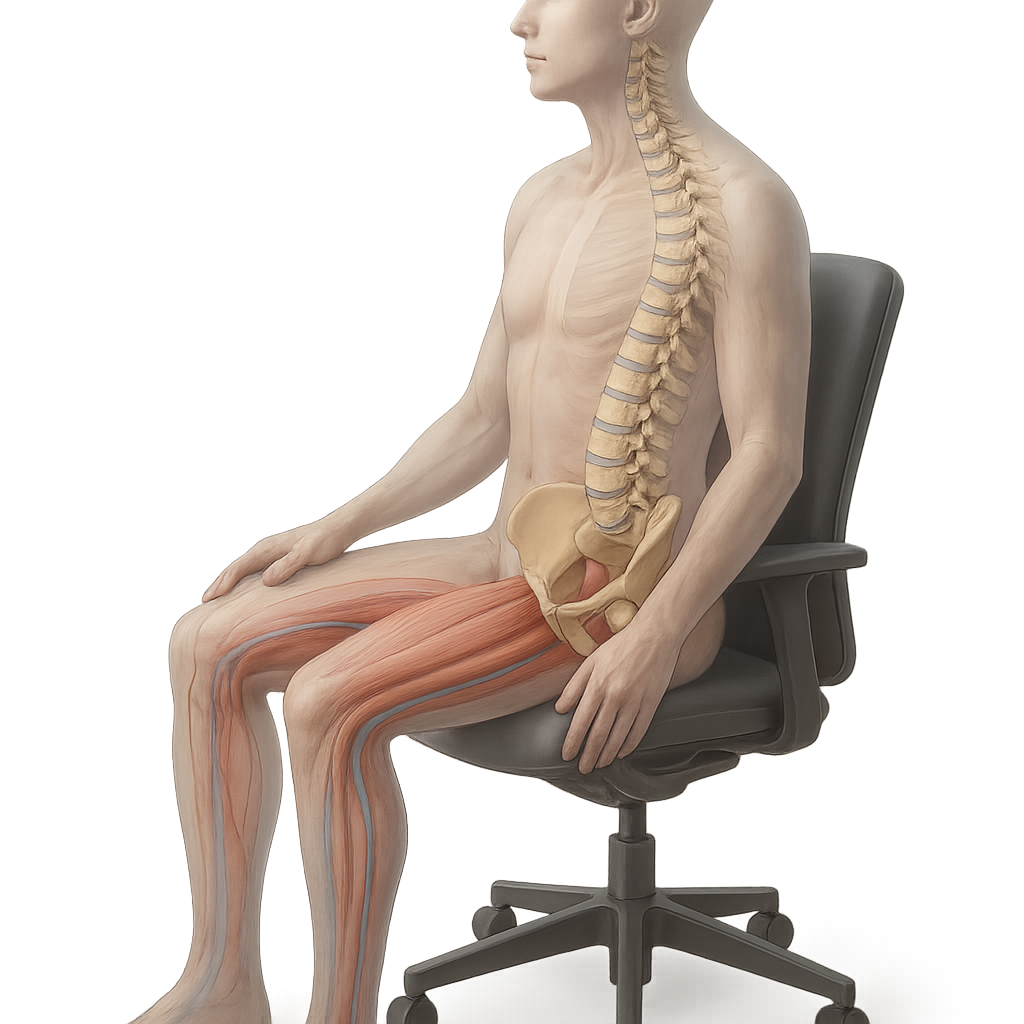
This pooling leads to several consequences:
- Oedema (swelling) of the ankles and feet, especially by the end of a working day
- Varicose veins, where veins become enlarged and gnarled due to the additional pressure
- Increased DVT risk, particularly in those with other risk factors such as obesity, dehydration, or a history of clotting
- Muscle atrophy over time, especially in the quadriceps and calves
- Restless leg syndrome, which has been associated with extended sedentary periods in some individuals
How to Reduce the Effects of Sitting All Day
Understanding the problem is only half the equation. Practical strategies exist that can significantly mitigate the effects of unavoidable desk work:
Break Up Sitting Time Frequently
Research consistently shows that breaking up sitting with short bouts of standing or light walking — even just for two to five minutes every 30 to 60 minutes — can meaningfully improve metabolic markers, blood pressure, and blood sugar levels. Setting a timer or using a reminder app is a practical way to make this a habit.
Optimise Your Workstation Ergonomics
Proper desk setup cannot eliminate the risks of sedentary work, but it can reduce musculoskeletal damage considerably. Key principles include keeping the monitor at eye level, ensuring the feet are flat on the floor, and maintaining the keyboard at a height that allows the elbows to remain at approximately 90 degrees.
Consider a Standing Desk
Height-adjustable desks allow workers to alternate between sitting and standing throughout the day. However, it’s worth noting that standing for extended periods comes with its own set of issues — including varicose veins and lower back fatigue — so alternation is key rather than simply standing all day.
Incorporate Movement Into the Working Day
Walking meetings, taking the stairs, eating lunch away from the desk, and making phone calls while standing or pacing are all low-effort ways to reduce total sedentary time without requiring additional hours at the gym.
Targeted Stretching and Strengthening
Hip flexor stretches, glute activation exercises, thoracic spine mobility work, and calf raises can counteract some of the specific physical effects of desk work. Doing these regularly — even briefly at the desk — makes a noticeable difference over time.
Conclusion
The human body is fundamentally designed for movement, and modern office culture sits in direct opposition to that biological reality. The evidence linking prolonged sitting to cardiovascular disease, metabolic dysfunction, musculoskeletal pain, poor mental health, and even certain cancers is substantial and growing. Sitting for ten or more hours a day — a reality for many office workers — carries measurable health risks that regular gym sessions alone are unlikely to fully reverse.
The key takeaway is not that sitting itself is catastrophic, but that long, unbroken periods of inactivity are. Frequent movement breaks, ergonomic adjustments, and an awareness of total sedentary time throughout the day are among the most evidence-based responses available. Small, consistent changes — standing up more often, walking when possible, stretching regularly — accumulate into meaningful long-term health differences. The body responds to what you do with it across the whole day, not just during a morning run or an evening workout.